
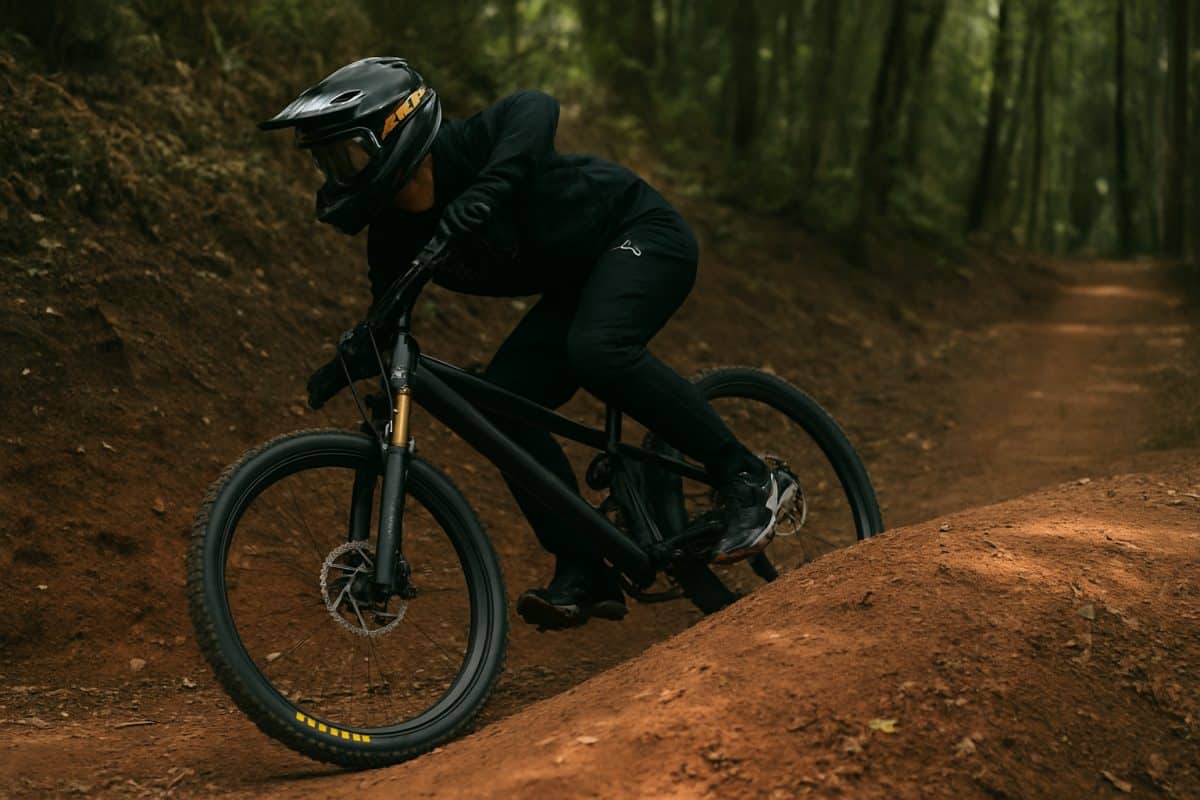
Queenstown’s trails ride like a different planet between a tacky autumn morning and a baked, dusty January afternoon. The corners are where that difference bites hardest — and where most riders quietly lose confidence over summer. Get a handful of fundamentals sorted, learn to tell a supported berm from a loose flat corner, and you will spend the dusty months railing turns instead of dabbing through them.
Why Queenstown Summer Corners Catch People Out
It Is the Dust, Not You
Ride a Queenstown trail in March and the corners feel grippy and obvious. Come back in late January and the same corners have a skim of fine, pale dust sitting on top of baked hardpack, and suddenly your front wheel is washing out on turns you have ridden a hundred times. Nothing about your riding has changed — the surface has.
That summer dust behaves like ball bearings. It fills the little surface texture that gives a tyre something to bite, so the grip you are used to in autumn simply is not there. The fix is not to ride scared. It is to understand what the surface is doing and adjust two or three habits so you are working with the conditions instead of being surprised by them.
Berm or Flat — Know Which One You Are In
Queenstown trails throw two very different corners at you, often in the same run. A supported berm is a banked wall of dirt that you can lean into and let it hold you up. A flat or off-camber corner has no bank at all — sometimes the trail even falls away from the turn — and the only thing keeping you on line is tyre grip and weight.
These need different techniques, and the single biggest mistake we see is riders attacking a loose flat corner the way they would rail a berm. Read the corner before you commit. If the dirt is not banked up to catch you, treat it with respect.
The Fundamentals That Do Not Change
Look Through the Turn, Not at the Hole
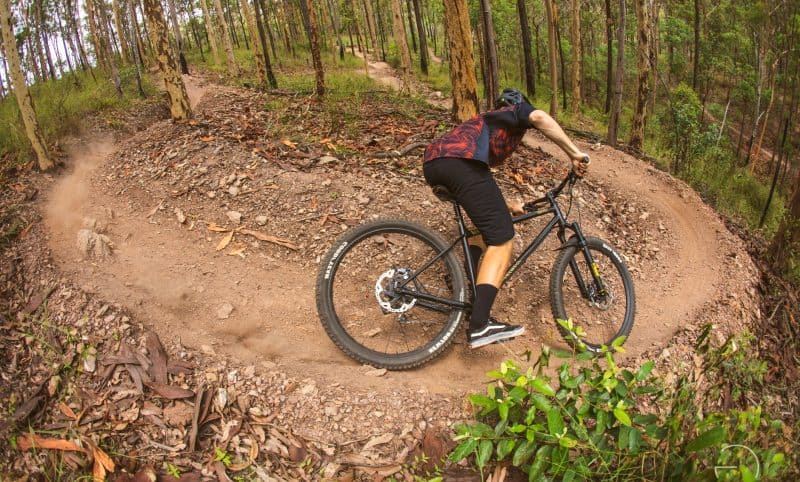
Vision is the cheapest speed and confidence you will ever find. Where your eyes go, the bike follows — so the rider staring at the loose rut on the inside is the rider who ends up in it. Lift your gaze and look to the exit of the corner, then past it to where you want to be next.
This matters even more in summer dust because the surface is busy and distracting. Trust your peripheral vision to handle the rocks and ruts you have already scanned, and keep your eyes hunting for the line out. Slow eyes make for nervous, late, jerky cornering. Looking ahead smooths everything out.
Low, Loose, and Heavy on the Outside Foot
Get your weight low and let the bike move underneath you. Drop your outside pedal to the bottom of the stroke and stand heavy on it — this drives the tyres into the dirt and is the closest thing to a magic trick in mountain biking. Push your inside hand down slightly to lean the bike while keeping your body more upright over it.
Keep your elbows out and your grip relaxed. A death-grip on the bars transmits every skip and slide straight into a panic correction. Loose arms let the bike wriggle on loose dust without taking you with it.
Brake Before, Not During
On grippy dirt you can get away with trailing the brakes into a turn. On Queenstown summer dust you cannot. A braking tyre is a tyre that is already using up its grip, and asking it to also hold a corner is how front wheels wash out.
Do your slowing while the bike is still upright and pointing straight, set your entry speed before the corner, then come off the brakes and let the bike roll through. If you genuinely need to scrub speed mid-corner, feather the rear only and keep the front rolling. The discipline of braking early is what separates riders who flow from riders who skid.
Railing a Supported Berm
Let the Berm Hold You Up
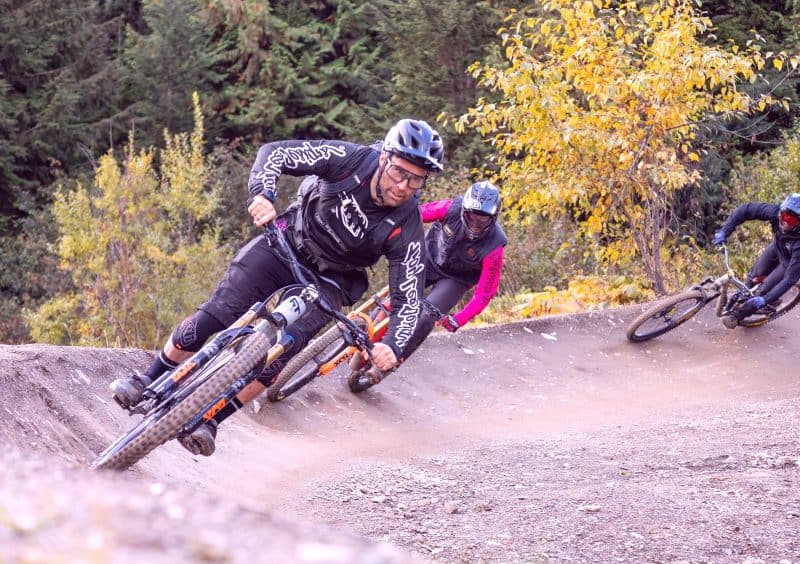
When the corner is properly banked, your job is to commit and let the wall do the work. Set your speed early, then drive into the berm and let it push back against your tyres. The higher line on a berm is usually faster and more supported; the low line is shorter but often blown out and dusty where everyone has braked.
Stay off the brakes through the apex. A berm only supports you while you are loading it, so braking mid-berm unweights the tyres at exactly the wrong moment. Trust it, look to the exit, and you will come out carrying speed.
Pump the Exit for Free Speed
A good berm gives you energy back if you ask for it. As the trail straightens out of the corner, push down through your legs and arms against the backside of the berm and the trail beyond it. That pump converts the corner’s shape into forward momentum without a single pedal stroke.
It is a small move that pays off all day, especially on the flowing lower-mountain trails where a clean pumped exit sets you up for the next feature. Riders who pump corners get to the bottom faster and fresher than riders who pedal frantically out of every turn.
Surviving a Loose Flat Corner
Weight the Tyres and Trust the Edge
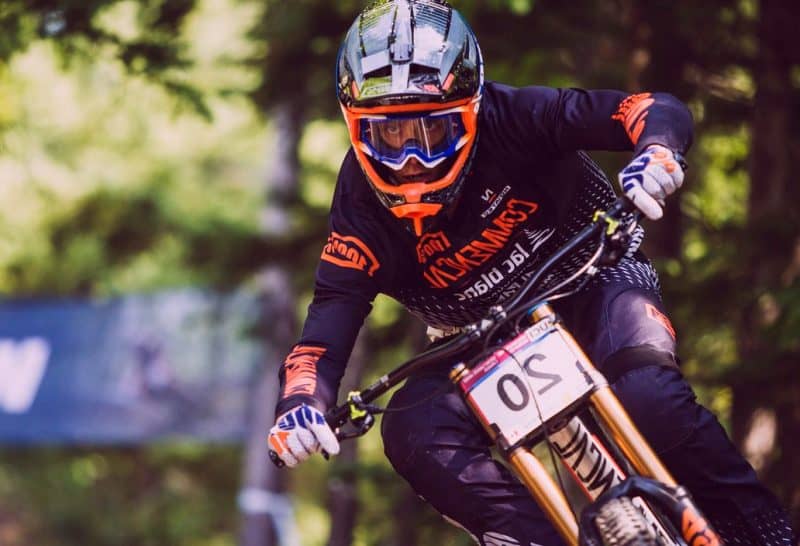
Flat and off-camber corners are where summer dust does its worst, and the instinct — to back off and tip the bike in gently — is exactly wrong. Light tyres skate across loose dust. So commit to that heavy outside foot, drop your weight, and press the bike into the ground to push the tyres through the dust to the firmer surface underneath.
Lean the bike more than your body so the side knobs of the tyre dig in while your weight stays centred over the contact patches. It feels counter-intuitive the first few times, but loading a tyre is what makes it grip when there is nothing to lean on.
Pick the Grippy Line, Not the Obvious One
On a flat corner the racing line is whatever holds grip, and that is rarely the worn centre groove where the dust collects. Look for darker, slightly damp, or more textured dirt — the edge of the trail, a strip of gravel, even a root you can roll across squarely. The Queenstown Mountain Bike Club’s trail crews and the wider local scene share a lot of this line knowledge, and resources like Queenstown MTB are a good starting point for which trails suit your level.
Scout the corner on your first lap, find the line that grips, and commit to it on the next. Half of cornering well on loose dirt is simply not riding the slippery part.
None of this is complicated, and none of it asks for more fitness or more nerve — just a few habits applied to the surface in front of you. Look to the exit, get low and heavy on the outside foot, brake before the turn, and read whether the corner is going to hold you up or leave it to your tyres. Practise it on a familiar trail first, where you already know the lines, and the loose summer dust stops being something that happens to you and becomes something you ride through on purpose.