
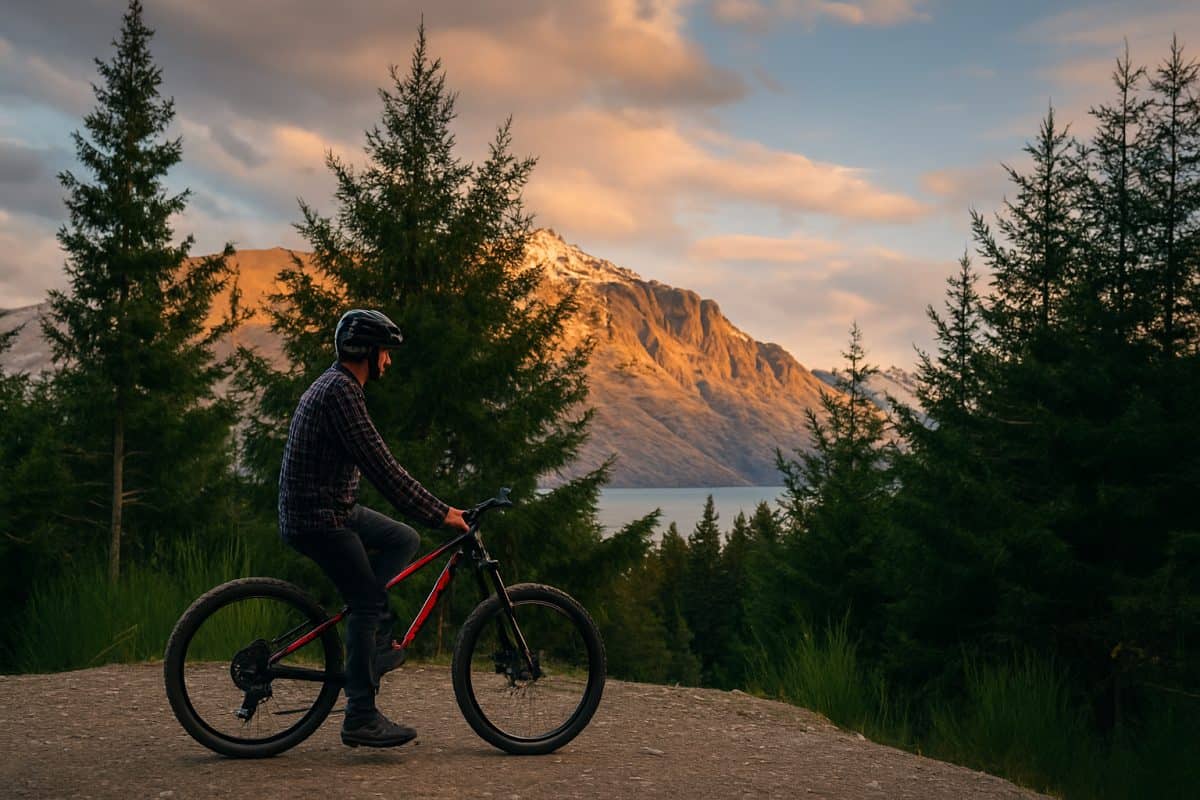
Ask any Queenstown local when to ride and the answer is almost always the same: autumn. Not because the trails are different — they are the same trails that bake in January dust and freeze in July frost. But from March to May, the conditions align in a way that makes everything ride better. Grippy surfaces, manageable temperatures, settled weather, and the kind of golden light that makes you stop on a ridgeline and forget you are supposed to be descending.
Why Autumn Is the Season
The Weather Window
Queenstown’s summer riding comes with caveats that the tourism brochures leave out. The nor-wester picks up after midday and turns exposed ridgelines into a wrestling match. Dust clouds on trails like Rude Rock coat your drivetrain and your lungs in equal measure. UV at this latitude burns faster than most visitors expect.
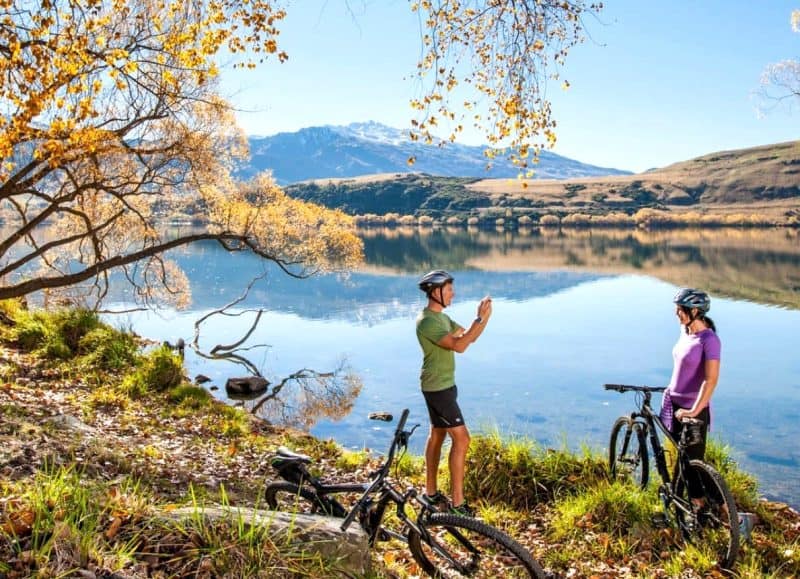
Autumn changes all of it. From March onward, the high pressure systems that dominate Central Otago’s weather become more stable and less windy. Daytime temperatures drop from the low thirties to a comfortable fifteen to twenty degrees — warm enough for short sleeves on a climb, cool enough that you are not rationing water on every ride. The afternoons stay rideable. You can start at noon and still have good conditions at four o’clock, which is something January almost never offers.
What Happens to the Trails
The first meaningful autumn rain does something transformative to Queenstown trails. Summer’s loose, powdery dust compacts into a surface that grips. Schist rock, which in dry conditions can feel like riding on marbles, develops the friction that lets you commit to corners and trust your front tyre on off-camber sections.
The change is not instantaneous. Early March trails are still dusty unless rain has come early. By mid-March to April, the surface has typically settled into that ideal state — firm, tacky, predictable. Roots that were slippery in summer become manageable. Loose corners that required cautious entry let you carry more speed. The trails are the same trails, but they ride as if someone has turned up the grip by twenty percent.
March: Still Summer, but Better
The First Cool Mornings
March in the Wakatipu Basin is summer with the edge taken off. The days are still long enough for after-work rides — sunset around 8pm at the start of the month, closer to 7pm by the end. But the mornings have shifted. Six-thirty starts no longer mean pedalling through leftover heat from yesterday. The air has a crispness that makes the first climb feel different, less effortful, more alert.
The trails have had a full summer of traffic and are well bedded in. If early rain has come, the dust is already gone. If it has not, you are riding what is essentially late-summer conditions with better temperatures. Either way, March is forgiving — it does not yet punish a late start or an unprepared rider the way May will.
Where to Ride in March
Everything is open in March. Skyline Bike Park is still running full timetable. Shuttle services to Coronet Peak and the Remarkables are operating. Alpine trails above the bushline are accessible and dry. The full menu is available.
For the Wakatipu Basin specifically, March is the month to ride the trails that suffer most in peak summer. The exposed ridgeline at the top of Coronet Peak, which bakes in January sun and cops the full nor-wester, is genuinely pleasant in March’s milder conditions. The Queenstown Trail along Lake Hayes, which gets crowded with walkers and families in December, thins out as school holidays end. If you are visiting and can choose your month, March gives you summer’s access with autumn’s comfort.
April: the Sweet Spot
Golden Light and Grippy Trails
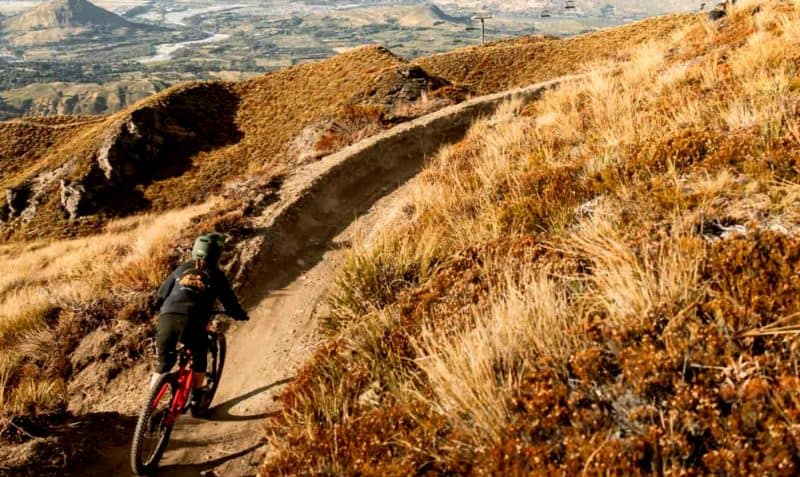
April is the month most Queenstown locals will tell you is the best of the year, and they are not being contrarian. The combination of conditions that converge in April does not repeat in any other month.
The autumn colours arrive properly in April. The willows around Lake Hayes turn gold. The poplars in the Arrow Basin light up. You are riding through a landscape that looks different from the green-and-brown palette of the rest of the year, and the lower-angled light gives everything a warmth that photographs cannot quite capture. More practically, the trail surfaces are at peak grip. April rain has compacted the summer dust without creating mud. Temperatures sit in the twelve to eighteen degree range — the zone where sustained effort feels efficient rather than punishing.
Fewer Crowds, Same Trails
The summer crowds leave in March. By April, the difference is tangible. Skyline Bike Park gondola queues that stretched to fifteen minutes in January are five minutes or less. Shuttle operators have empty seats. Popular trailheads like Gorge Road and the Queenstown Trail access points are noticeably quieter.
This matters more than it sounds. Fewer riders on trail means fewer conflicts at blind corners, less queueing at technical features, and the psychological space to ride at your own pace without feeling rushed. If you are working on a particular skill — a tricky rock garden, a steep chute entry — April gives you the room to session it without holding up a queue.
The First Frost Warning
Late April brings the first frosts to the valley floor. If you are staying in Queenstown or Frankton, you will see it on your windscreen in the morning and feel it in the air when you step outside at seven. The frost is not yet a serious riding problem, but it changes the morning equation.
Trails at lower elevation — the Queenstown Trail, Gorge Road, parts of the Jack’s Point network — can be frozen hard until mid-morning on frost days. The surface is rideable but unforgiving: ruts that were soft yesterday are concrete today. By 10am the sun has done its work and conditions return to normal. The practical response is to start later on frost mornings, or ride higher where the sun hits earlier. It is a small adjustment, but it is the first sign that autumn is transitioning toward winter.
May: Riding the Edge
What Closes and What Stays
May is when the Wakatipu Basin starts to close down for winter. Skyline Bike Park typically ends its season in late April or early May. Shuttle operators reduce services or stop entirely. Above the bushline, trails become unreliable — snow on the summit ridges, frozen ground that does not thaw until midday, and daylight that runs out before you do.
Below the bushline, things are different. Trails in the valley and on lower slopes remain rideable through May in most years. The Gorge Road trails, the lower Queenstown Trail sections, and sheltered trails around Arrowtown still offer good riding when the weather cooperates. The key is flexibility — May rewards riders who can adjust plans based on what the morning looks like rather than committing to a route the night before.
Gear Adjustments for Late Autumn
The gear that worked in March will not cut it in May. Mornings start below zero on the valley floor, and even afternoon riding at altitude can feel genuinely cold if you stop moving.
A merino base layer is the single most useful addition. It regulates temperature on climbs without leaving you soaked and freezing on descents. Full-finger gloves replace the short-finger gloves that worked all summer. A wind shell — something packable that you can stuff in a jersey pocket or hydration pack — is essential for any ride that crosses a ridgeline or exposed face. The wind at altitude in May is not the warm nor-wester of summer. It is cold and it finds every gap.
Tyre pressure is worth adjusting too. Cooler, damper surfaces reward slightly lower pressures than the hard-packed summer trails. Five to ten PSI less than your summer setup gives better grip on the schist and root sections that characterise most Queenstown trails. Small change, noticeable difference.
Making the Most of It
Planning Around the Weather
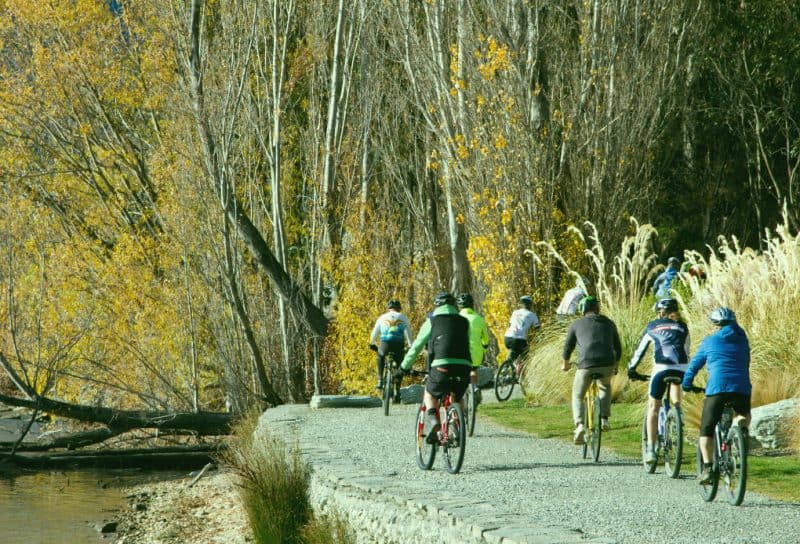
MetService’s Queenstown forecast is the starting point for any autumn ride decision, but reading it for cycling requires some translation. The headline temperature matters less than the wind forecast and the rain timing.
A settled high pressure system over Central Otago means reliable riding for days at a time — clear mornings, light winds, stable temperatures. These windows are more common in autumn than summer. When a front approaches from the south or west, you typically get 24-48 hours of deteriorating conditions. The trick is knowing when the front arrives and planning your riding before it does.
Southerly changes bring the coldest conditions. A nor-wester in autumn is milder than in summer but still dries trails fast. The best autumn weeks are the still, settled ones where the mountain forecast shows light winds and clear skies — that is when every trail in the basin is at its best.
The Rides You Should Not Miss
If autumn gives you a settled week in the Wakatipu Basin, these are the rides that justify the trip.
Coronet Peak summit to base in April conditions — grippy surface, clear air, no wind. The exposed ridgeline section that is unpleasant in summer becomes one of the best viewpoints on two wheels. The full descent runs nearly 700 metres of vertical and takes forty-five minutes if you stop to look around, which you should.
The Arrowtown loop on a golden morning — Bush Creek trails through autumn colour, connecting to the Arrow River track and back. Sheltered, scenic, and at its most photogenic in April-May. Less technical than the Queenstown gravity trails but arguably more beautiful.
The Queenstown Trail from Frankton to Arrowtown via Lake Hayes — flat, accessible, and transformed by autumn light. This is the ride you recommend to visitors who want to see why people love this basin. In April, with the willows gold and the lake still, it is hard to argue with.
Summer gets the marketing. Winter gets the ski tourists. But autumn belongs to the riders who know what they are looking for. Three months where the Wakatipu Basin’s trails are at their most grippy, the weather is at its most cooperative, and the crowds are somewhere else. If you only ride here once, make it April.